

You’re not imagining it. After your child spends time on a screen, whether it’s 20 minutes or two hours, they come off like a completely different kid. Meltdowns, aggression, inability to transition, and sensory overload that seems totally out of proportion to what’s happening. St. Petersburg parents come to Blossom Family Chiropractic confused and sometimes feeling guilty, wondering what they’re doing wrong. The answer usually has very little to do with your parenting and everything to do with the nervous system.
This is not a screen-shaming conversation. This is a nervous system conversation. And once you understand what’s happening in your child’s body, everything starts to make a lot more sense.
What Does Screen Time Actually Do to a Child's Nervous System?
Digital screens- especially fast-paced content, video games, and social media- are extraordinarily stimulating to the developing nervous system. They deliver rapid-fire visual and auditory input that activates the brain’s dopamine reward system at a rate that natural environments simply don’t match. For children whose nervous systems are already sensitized or dysregulated, this stimulation is like pouring gasoline on a fire.
The prefrontal cortex, the part of the brain responsible for self-regulation, impulse control, and decision-making, is still actively developing until age 25. During screen time, much of the neural activity shifts away from this regulatory center and toward the limbic system (the emotional, reactive brain). When the screen turns off, the brain has to suddenly shift back and for a dysregulated nervous system, that transition is extremely difficult.
What Is Sensory Overload and Why Are More Kids Experiencing It?

Sensory overload happens when the nervous system receives more input than it can efficiently process and regulate. Children with sensitive or dysregulated nervous systems have a lower threshold for this overload, meaning they tip into overwhelm faster, and recover more slowly. Common triggers include screens, crowded or loud environments, certain textures or smells, transitions, and unexpected changes.
We are seeing more children in St. Pete and across Tampa Bay with sensory sensitivities, and researchers believe this is tied to a combination of factors including birth stress, environmental toxins, reduced outdoor play, and chronically elevated cortisol levels from a culture that moves too fast for young nervous systems.
What Role Does the Nervous System Play in Sensory Processing?
The nervous system is responsible for receiving, interpreting, and responding to every piece of sensory information a child takes in. When the spine is misaligned or moving poorly, the signals traveling through the spinal cord become distorted- like a phone call with bad reception. The brain gets noisy, unreliable information and responds with alarm rather than calm assessment.
At Blossom Family Chiropractic in St. Petersburg, we use INSiGHT CLA scanning technology to measure how efficiently your child’s nervous system is processing and adapting to the demands being placed on it. Many sensory-sensitive children in our practice show clear patterns of nervous system stress that, once addressed, help them become significantly more resilient.
How Does Chiropractic Care Help With Sensory Overload?
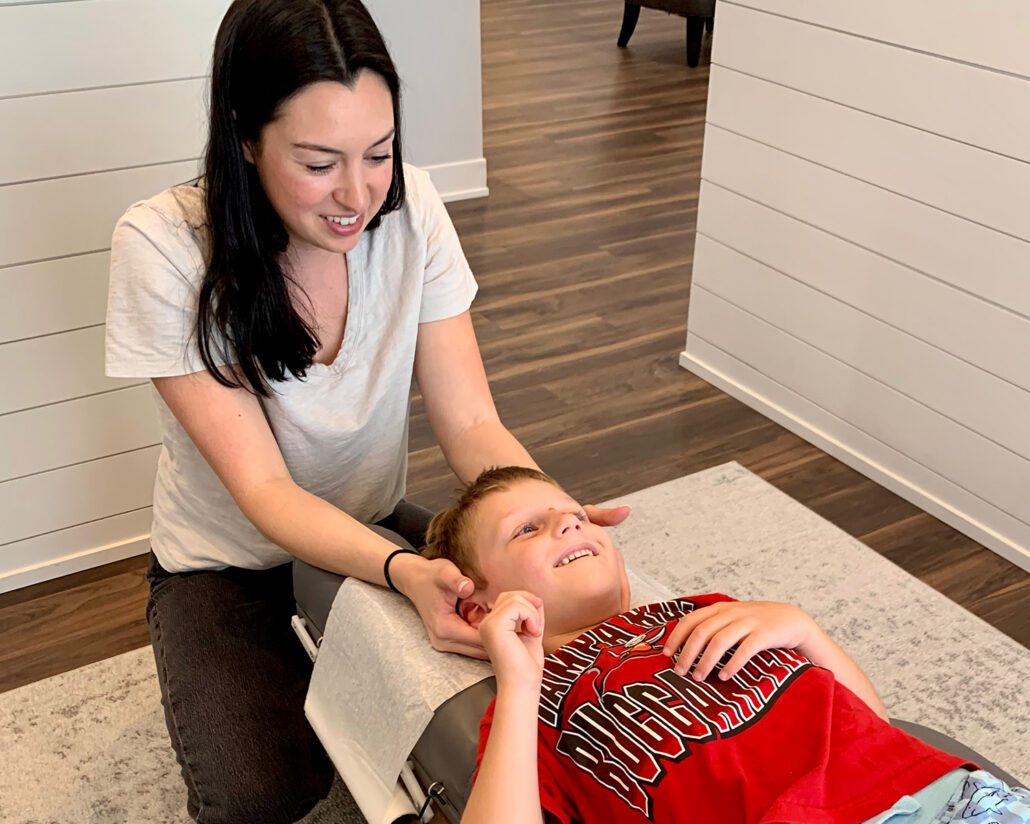
Chiropractic adjustments work by removing interference from the spinal cord so the brain and body can communicate more clearly and efficiently. For sensory-sensitive children, this means:
- Lower overall nervous system activation (less time in fight-or-flight)
- Improved vagal tone- the parasympathetic 'calm and connect' mode
- Better filtration of sensory input so the brain isn't overwhelmed
- More stable emotional baseline and faster recovery from meltdowns
- Improved sleep, which further supports daytime regulation
What Can Parents Do Alongside Chiropractic Care?
Chiropractic care works best as part of a bigger picture. Here are things that support your child’s nervous system alongside regular adjustments at Blossom Family Chiropractic in St. Pete:
- Consistent outdoor time- nature is incredibly regulating for developing nervous systems
- Screen-free transition time before bed (at least 60–90 minutes)
- Predictable routines -dysregulated nervous systems thrive on knowing what comes next
- Co-regulation- your own calm, regulated presence is the most powerful tool you have
- Proprioceptive input- jumping, climbing, and heavy work help regulate the nervous system naturally
Frequently Asked Questions About Sensory Overload and Chiropractic in St. Pete
My child has sensory processing disorder, can chiropractic care help?
Many children with sensory processing disorder (SPD) have measurable nervous system dysregulation that chiropractic care can address. At Blossom Family Chiropractic in St. Petersburg, we work with sensory-sensitive children regularly and see meaningful improvements in their tolerance for sensory input, emotional regulation, and overall quality of life.
How is this different from occupational therapy?
OT and chiropractic care complement each other beautifully. OT helps children develop coping strategies and build sensory tolerance from the outside in. Chiropractic care addresses the underlying nervous system function from the inside out. Many OTs in the St. Pete area refer to Blossom specifically because their clients make faster progress when their nervous systems are supported.
Should I limit screen time while my child is under chiropractic care?
Reasonable screen limits are always a good idea for developing brains. But we don’t want families to feel guilty about screen use, we want to build a nervous system that’s resilient enough to handle modern life. Chiropractic care helps build that resilience over time.
Does your child struggle after screens or in busy environments?
Call Blossom Family Chiropractic at 727-498-5643 — we’d love to help.